About 107 minutes
A Field Book of the Stars — Inside the Classic
Stars Planets
24,586 recorded words. 8 minutes difference from this book's estimate.
View Gutenberg source #20769
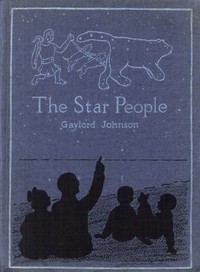
Before opening The Star People — Themes and Context, the edition data offers a quick orientation: 22,552 words, 1 hr 39 min estimated reading time, and 4 detected text sections.
The text analysis averages about 18.0 words per sentence, while the detected sections provide another way to judge how the source is divided.
Project Gutenberg metadata also associates the work with “Astronomy -- Juvenile literature,” connecting these edition facts with the source record’s subject description.
Explore this collection
These alternatives are selected using recorded categories and estimated reading time.
About 107 minutes
Stars Planets
24,586 recorded words. 8 minutes difference from this book's estimate.
View Gutenberg source #20769About 91 minutes
Stars Planets
20,921 recorded words. 8 minutes difference from this book's estimate.
View Gutenberg source #58498About 89 minutes
Stars Planets
20,246 recorded words. 10 minutes difference from this book's estimate.
View Gutenberg source #71999Search stored excerpts and compare books → Choose by your preferences →
Choices use stored catalog measurements. Estimates vary with reading speed. A shared category is a catalog label, not a claim that two books have the same argument or literary quality.
Search reads excerpt text stored with this catalog and links to its associated Gutenberg record. The connection is stored in the site database; this tool does not recheck that every excerpt is word-for-word identical to that external record. Excerpt search does not cover every chapter and does not verify historical publication dates.
Catalog snapshot checked: 2026-09-26. Coverage: 85 public books, 83 available source excerpts.
Calculated from edition completeness, EPUB availability, text structure and catalogue metadata. Not a user rating.
Total of 100 points, scaled to a 2.5-5.0 range. Editions with an empty description or a missing EPUB file are not scored.
Public-domain source text
The source text is kept in the dedicated reader, separate from this catalogue record and its commentary.
Gaylord Johnson's The Star People (1921) introduces astronomy through a fictional Society of Star-Gazers, a group of children who meet on successive evenings with their uncle, Henry. The book's narrative voice is distinctly conversational, with Uncle Henry addressing the children by nicknames like "Pete" and "Betty," and the children responding with exclamations such as "That's great!" and "Poor little rabbit!" This informal tone, combined with the framing device of a blackboard and chalk, creates a sense of immediate, shared discovery. The pacing is carefully calibrated: each evening covers one or two constellations, with the children actively participating by drawing the star patterns themselves.
The narrative relies heavily on dialogue to convey astronomical information. Uncle Henry's explanations are interwoven with the children's questions and reactions, as when Peter asks about Sirius and Uncle Henry responds, "Right you are, Pete, it is important." This back-and-forth mimics a real classroom interaction, with the children's curiosity driving the lesson forward. The language is deliberately simple and vivid: stars are described as making a dog's "backbone" or a rabbit's "fore-shoulder," turning abstract points of light into tangible body parts. The children's emotional responses—Betty's pity for the rabbit, Peter's eagerness to draw a horse—add a layer of engagement that a straightforward textbook would lack. Johnson avoids technical jargon, instead using phrases like "extend the line" and "put in the chalk dots" to keep the instructions accessible.
The book's structure mirrors the slow, methodical process of learning the night sky. Each constellation is built step by step: first, a bright star is identified, then lines are drawn to connect fainter stars, and finally the outline is filled in. For example, finding Canis Major begins with Sirius, then proceeds to the dog's backbone, forelegs, ears, hind feet, and tail. This incremental approach prevents overwhelm and gives the reader a sense of accomplishment. The pacing also varies with the children's involvement: when Betty draws the rabbit herself, the narrative slows to highlight her careful work, while Uncle Henry's occasional jokes—like the dog chasing a rabbit that "never could" be caught—provide light relief. The seasonal organization (summer and winter evenings) further structures the learning, with each session building on previous knowledge.
Throughout the excerpts, the blackboard serves as both a literal and figurative tool for teaching. Uncle Henry instructs Peter to "put in the chalk dots as we find the stars," and later Betty asks to draw the rabbit's outline herself. This hands-on activity is central to the book's method: the reader is encouraged to visualize the constellations as they are being drawn, with the text providing the coordinates. The blackboard also allows for mistakes and corrections—when Peter wants to draw a horse, Uncle Henry gently redirects him: "In just a little while, Pete, we're making the rabbit now." This interaction underscores the collaborative, patient atmosphere. The book even includes maps inside the covers, with numbered figures keyed to the text, so readers can replicate the blackboard drawings in the real sky. The device transforms passive reading into an active, participatory experience.
Readers should approach The Star People as a script for a live demonstration rather than a reference manual. To get the most from it, have a star chart or the book's own maps handy, and consider using a flashlight and a dark room to mimic the "electric torch" the children use. The dialogue rewards reading aloud, especially the children's interjections, which give the lessons a playful rhythm. Johnson's method works best when the reader pauses to trace each constellation step by step, as the Society does, rather than skimming ahead.
That rainy afternoon, I kept returning to the chalk-drawn constellations of Gaylord Johnson’s star-gazers, their patient, unhurried voices lingering long after I closed the book. The same quiet wonder surfaced later in The Book of Stars: Being a Simple Explanation of the Stars and Their Uses to Boy Life — Reading Companion, where the night sky felt less like a lesson and more like an old friend’s whispered story.
Create a short personal record of your experience with this book.