About 252 minutes
The Ways of the Planets — Edition Insights
Stars Planets
57,836 recorded words. 7 minutes difference from this book's estimate.
View Gutenberg source #51284
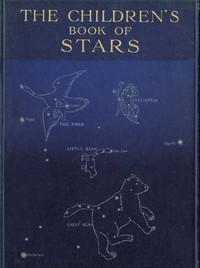
For Earth and Sky Every Child Should Know Easy studies of the earth and the stars for any time and place — Background and Themes, the stored edition analysis reports 59,428 words, 4 hr 19 min estimated reading time, and 7 detected text sections.
The text analysis averages about 19.0 words per sentence, while the detected sections provide another way to judge how the source is divided.
Project Gutenberg metadata also associates the work with “Geology -- Juvenile literature,” connecting these edition facts with the source record’s subject description.
Explore this collection
These alternatives are selected using recorded categories and estimated reading time.
About 252 minutes
Stars Planets
57,836 recorded words. 7 minutes difference from this book's estimate.
View Gutenberg source #51284About 249 minutes
Stars Planets
57,073 recorded words. 10 minutes difference from this book's estimate.
View Gutenberg source #67234About 239 minutes
Stars Planets
54,902 recorded words. 20 minutes difference from this book's estimate.
View Gutenberg source #73996Search stored excerpts and compare books → Choose by your preferences →
Choices use stored catalog measurements. Estimates vary with reading speed. A shared category is a catalog label, not a claim that two books have the same argument or literary quality.
Search reads excerpt text stored with this catalog and links to its associated Gutenberg record. The connection is stored in the site database; this tool does not recheck that every excerpt is word-for-word identical to that external record. Excerpt search does not cover every chapter and does not verify historical publication dates.
Catalog snapshot checked: 2026-09-26. Coverage: 85 public books, 83 available source excerpts.
Calculated from edition completeness, EPUB availability, text structure and catalogue metadata. Not a user rating.
Total of 100 points, scaled to a 2.5-5.0 range. Editions with an empty description or a missing EPUB file are not scored.
Public-domain source text
The source text is kept in the dedicated reader, separate from this catalogue record and its commentary.
Julia Ellen Rogers addresses her young audience directly, calling the earth a "Great Stone Book" and inviting readers to "read" its layers. The book pairs geology and astronomy in a single volume, moving from the ground beneath our feet to the stars overhead. Rogers avoids technical jargon, instead using everyday comparisons: mountains are "wrinkles" on an old earth, and a sandy beach is "sandstone in the making."
The text is structured as a series of short, self-contained studies, each focused on a single topic—from fossil fish to the North Star. This modular design allows readers to dip in at any point. Rogers frequently uses rhetorical questions ("What becomes of the rain?") to frame each lesson, and she grounds abstract processes in visible, local examples, such as the Grand Canyon or Mount Rainier.
Rogers writes as a knowledgeable guide, not a distant lecturer. She uses the inclusive "we" and "our" to draw the reader into shared observation: "We know little about the substance that occupies the four thousand miles of distance between the surface and the centre of our earth." This phrasing acknowledges the limits of current science while inviting curiosity. She also anticipates confusion, explaining that mountains can form by "addition" (volcanic buildup) or "subtraction" (erosion of a plateau). The tone is patient and reassuring, never condescending.
Her sentences are short and declarative, often beginning with concrete subjects: "The fold that forms a typical mountain ridge has a cone of granite." She avoids passive constructions, keeping the reader engaged. When introducing a new term like "faults," she defines it immediately in context: "These slips are known as faults." This technique ensures that vocabulary is learned through use, not memorization.
The book's pacing mirrors its subject. Early chapters on sedimentary rocks move deliberately, describing gradual processes: "Layers upon layers of sandstone, shales, limestone, and the like, are exposed when a river cuts a canyon." The prose accumulates detail like sediment. Later sections on volcanoes and earthquakes shift to shorter, more urgent paragraphs: "Vesuvius is at present showing us how volcanic mountains are made." This change in tempo reflects the suddenness of volcanic action.
Rogers also varies the pace within chapters. A typical section begins with a broad statement, then narrows to a specific example. For instance, after explaining that "mountains of upheaval" are formed by bending crust, she immediately cites Mt. Hood and Mt. Rainier as local instances. This pattern—general principle, then concrete case—helps young readers grasp abstract ideas through familiar landmarks.
Throughout the excerpts, Rogers returns to the idea of transformation. Rocks are "made" and "unmade"; mountains "grow" and are "worn down"; the earth's crust is "crumpled" and "folded." She uses active verbs to describe geological change: water "cuts," wind "carries," lava "floods." This dynamic vocabulary reinforces the message that the earth is constantly changing.
Another recurring detail is the emphasis on visible evidence. Rogers points to "our deepest wells and mines" and "the slopes of mountains" as places where the earth's history is laid bare. She also uses photographs and diagrams (credited to the American Museum of Natural History and Mrs. Jerome B. Thomas) as tools for observation. The text consistently encourages readers to look at the world around them—a sandy beach, a river cutting a canyon—and see the same forces at work.
Rogers wrote for a time when families might form a "Star Club" to study the night sky together. Her book remains a period piece of early science education, notable for its direct address and concrete imagery. Readers interested in the history of children's nonfiction or the evolution of science writing will find in these pages a clear, unpretentious model of how to make complex ideas accessible without oversimplifying them.
I keep thinking about that old nature guide, how it made the ground beneath my feet feel like a long story, patient and slow. There’s a tenderness in that quiet way of knowing things. Reading about The Children's Book of Stars — Edition Insights brought back the same hush, like remembering a friend who taught me to look up without hurry.
Answer a few questions and save a private reflection on this device.