
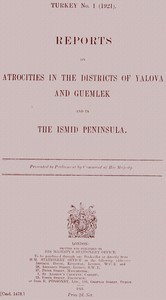
Reports on atrocities in the districts of Yalova and Guemlek and in the Ismid…
This isn't a book with a plot in the traditional sense. It's a collection of field reports, witness testimonies, and photographs compiled by military officers from Britain, France, and Italy in the spring of 1921.
The Story
The 'story' here is an investigation. In the messy aftermath of World War I, with the Ottoman Empire collapsing, alarming reports reached the Allies about violence against Greek and Armenian communities in towns near the Sea of Marmara, like Yalova and Guemlek. An international commission was formed to find out the truth. They toured the ruined districts, interviewed survivors—often the only ones left in ghost towns—and documented what they saw: homes systematically burned, bodies left unburied, and populations terrorized into flight. The report presents their findings plainly, listing destroyed villages by name and recounting survivor stories in direct, clinical language. The narrative is the process of uncovering a tragedy, piece by piece.
Why You Should Read It
You read this for the chilling clarity of it. There's no novelist's flair here, and that's what gives it power. The dry, official tone somehow makes the horrors described even more stark. You're not getting a historian's later analysis; you're getting the raw notes from the scene. It forces you to confront history as it was recorded in the moment, free from decades of political spin or simplified narratives. The included photographs are particularly jarring—they aren't grainy archival shots but clear evidence, submitted with the report. It’s a sobering reminder of how bureaucracy, even in its coldest form, can become a tool for memory and justice.
Final Verdict
This is a challenging but crucial read. It's perfect for history buffs who want to go beyond textbooks and engage with primary sources, or for anyone interested in human rights, conflict studies, or the aftermath of war. It's not for the faint of heart—the subject matter is grim. But if you believe that bearing witness matters, even a century later, this document is a powerful and important act of just that. Don't expect a story with an ending; expect a window into a moment of profound rupture, left open for us to look through.
This masterpiece is free from copyright limitations. It serves as a testament to our shared literary heritage.
Joseph Thomas
10 months agoI found the author's tone to be very professional yet accessible, the logic behind each conclusion is easy to follow and verify. This adds significant depth to my understanding of the field.
Mary Jones
2 years agoThis digital copy caught my eye due to its reputation, the footnotes provide extra depth for those who want to dig deeper. This has become my go-to guide for this specific topic.
William Lee
10 months agoI stumbled upon this title during my weekend research and the breakdown of complex theories into digestible segments is masterfully done. Truly a masterpiece of digital educational material.
Richard Davis
10 months agoInitially, I was looking for a specific answer, but it manages to maintain a consistent flow even when discussing difficult topics. Top-tier content that deserves more recognition.
Patricia Wilson
9 months agoI wanted to compare this perspective with traditional views, the author doesn't just scratch the surface but goes into meaningful detail. It definitely lives up to the reputation of the publisher.