
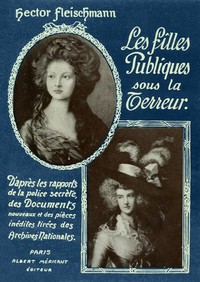
Les Filles Publiques sous la Terreur by Hector Fleischmann
Hector Fleischmann's book pulls back the grand, bloody curtain of the French Revolution to show us the street-level reality. It's 1793-1794 in Paris. The king is gone, but the new Republic is just as deadly. While politicians debate liberty and the guillotine works overtime, a whole class of women is just trying to make it through the night.
The Story
This isn't a novel with one main character. Instead, Fleischmann uses historical records, police archives, and pamphlets of the time to piece together the collective story of Parisian prostitutes. We see their world: the specific streets and brothels they worked, the constant threat of arrest by the revolutionary police, and the grim reality of their daily survival. The narrative shows how the lofty ideals of the Revolution crashed directly into their lives. Laws meant to 'clean up' morals or control disease often just made their existence more precarious and dangerous. They were caught between the old prejudices and the new, often hypocritical, puritanism of the Terror.
Why You Should Read It
What grabbed me was how this book flips the script. We're so used to stories about revolutionaries and nobles. This is about the people who were considered disposable by all sides. Fleischmann doesn't romanticize them; he shows their desperation, cunning, and resilience. You get a raw, unfiltered look at how political upheaval affects the most vulnerable. It makes the Revolution feel less like a history page and more like a lived, messy, and often cruel human experience. It’s a powerful reminder of who gets left out of the history books.
Final Verdict
This is a must-read for anyone who loves deep-cut history or social history that focuses on everyday people. It's perfect for readers who enjoyed books like 'The Return of Martin Guerre' or the gritty, ground-level perspectives in Hilary Mantel's work, but want nonfiction. Be warned: it's not a light read. It's grim and unflinching. But if you're ready to see the French Revolution from its darkest, most forgotten alleyways, this forgotten early-20th century work is a shocking and utterly compelling window into the past.
There are no legal restrictions on this material. You can copy, modify, and distribute it freely.
Matthew Wright
1 year agoNot bad at all.
Christopher Young
1 year agoSimply put, the clarity of the writing makes this accessible. Truly inspiring.
Nancy Gonzalez
1 year agoFrom the very first page, the character development leaves a lasting impact. Definitely a 5-star read.
Ethan Robinson
4 months agoSurprisingly enough, the clarity of the writing makes this accessible. I learned so much from this.




Susan Perez
7 months agoI found the data interpretation to be highly professional and unbiased.